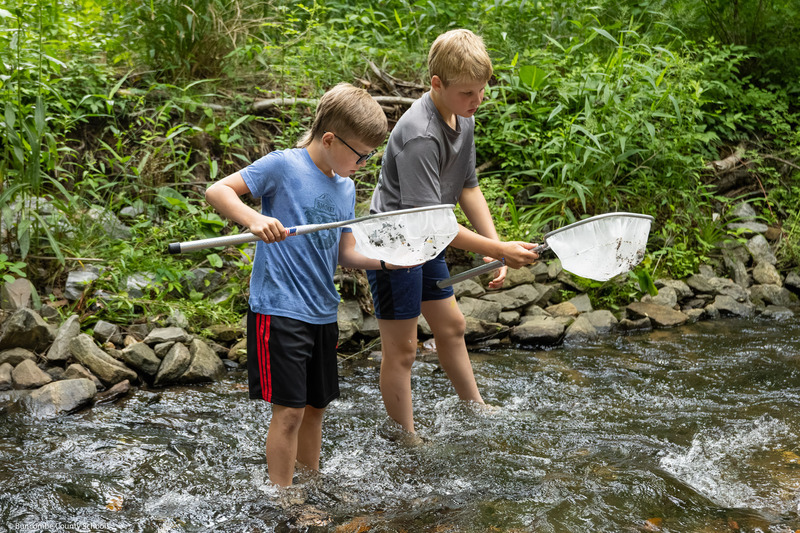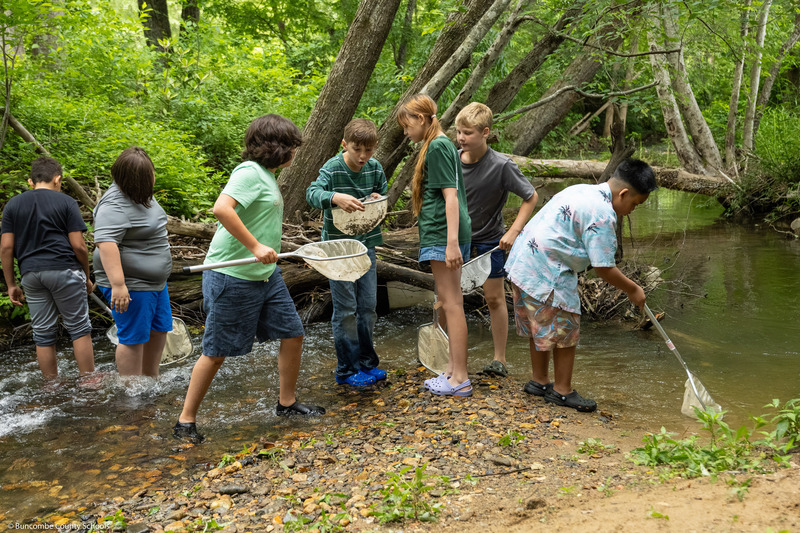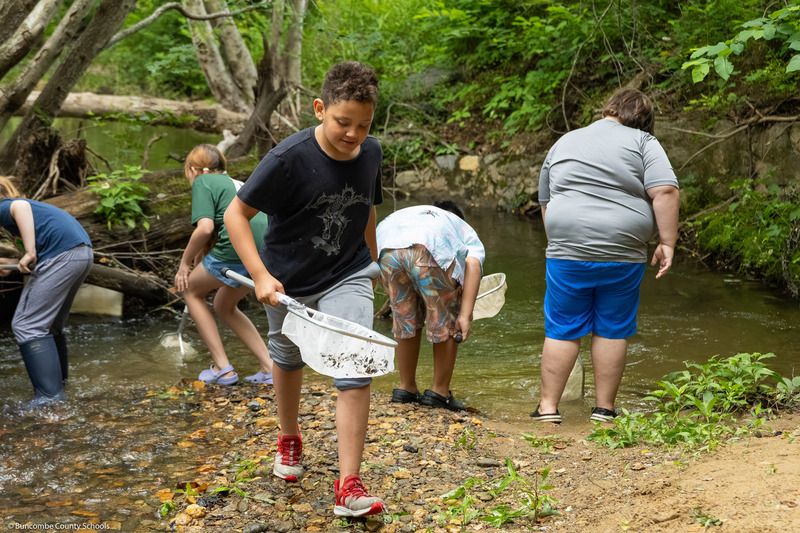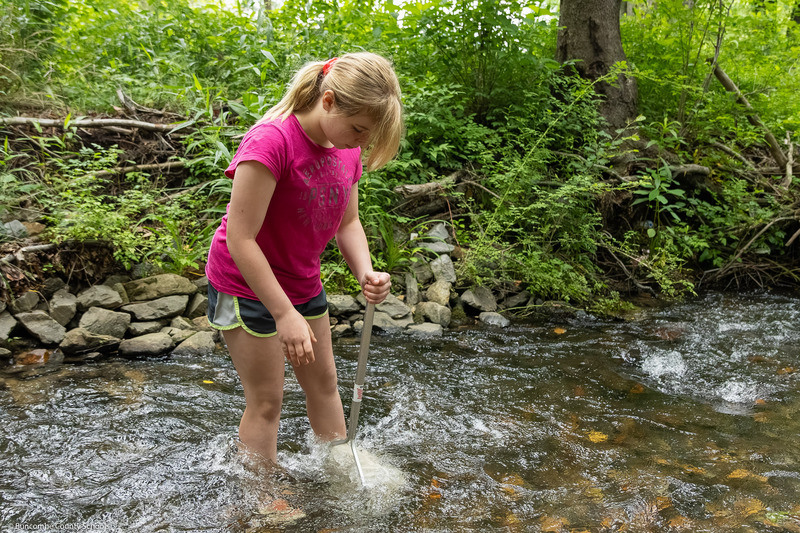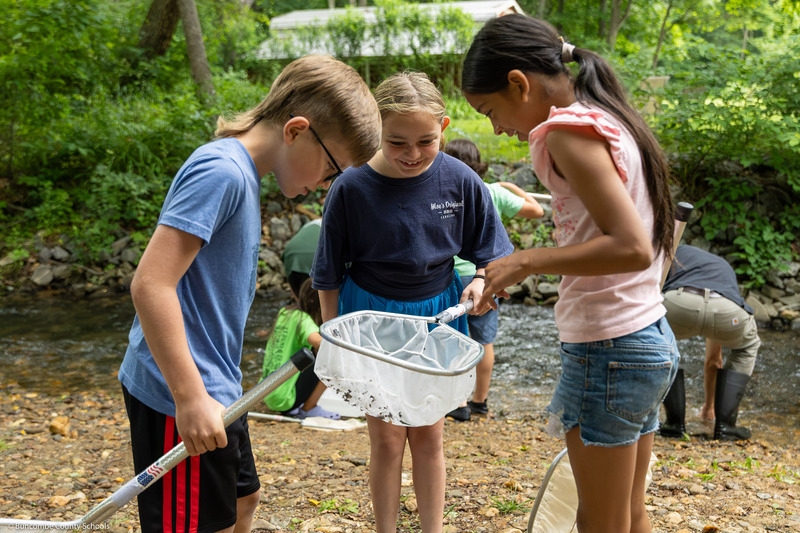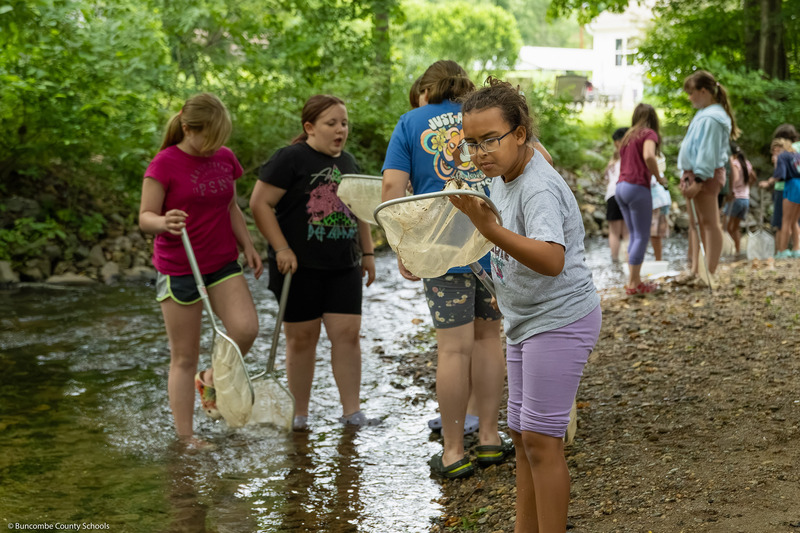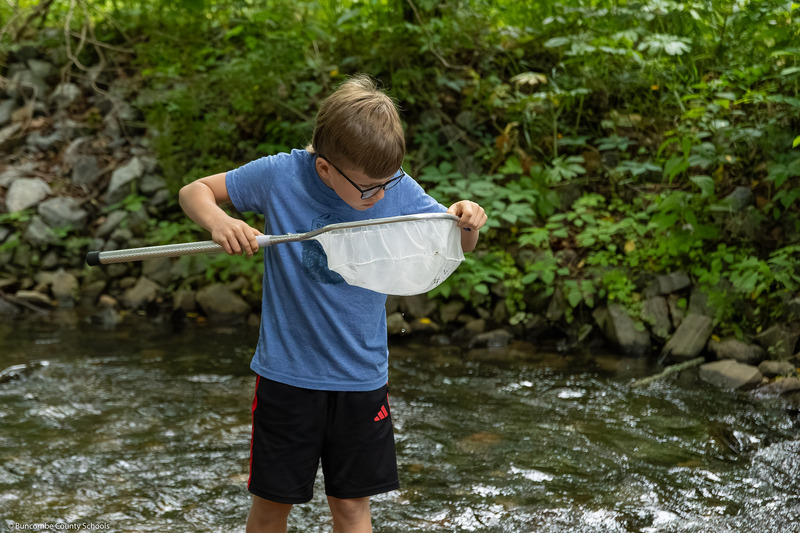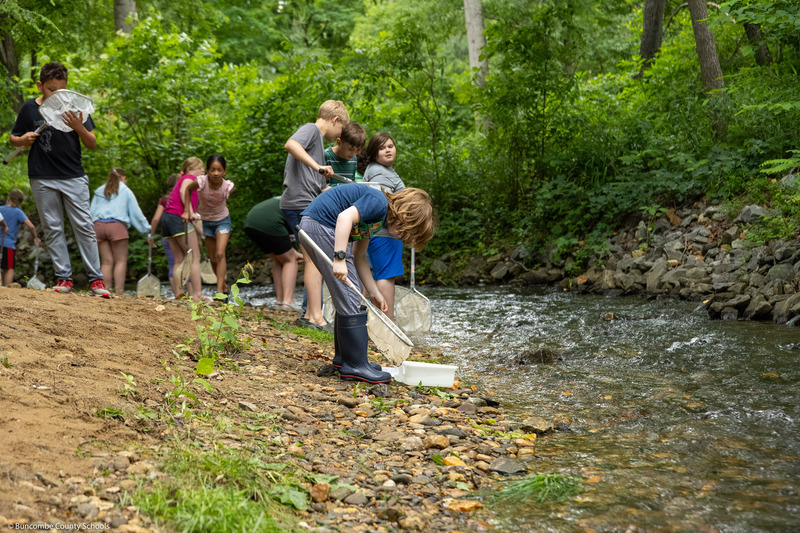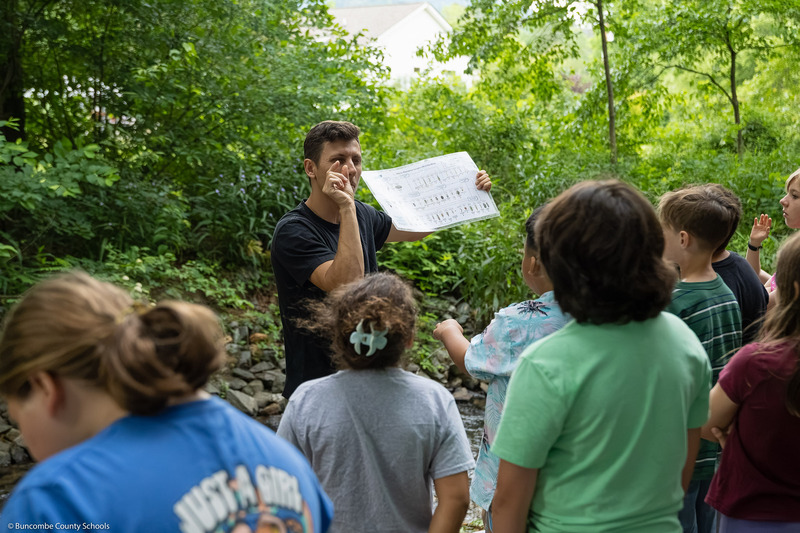
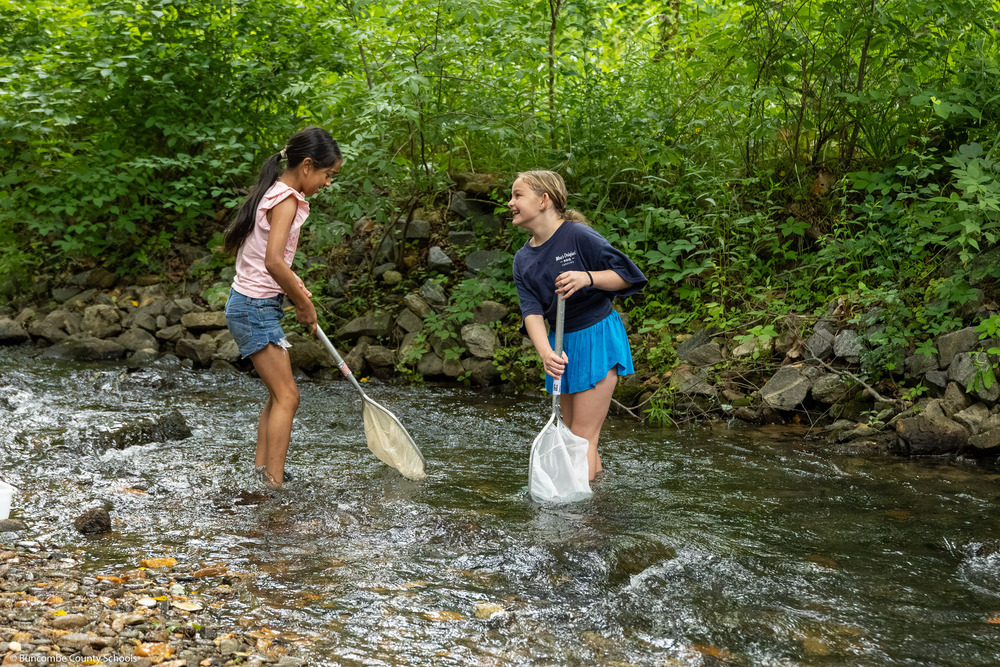
🐌🌿🥾 Black Mountain Elementary School fourth grade students traded the classroom for the creek as they partnered with RiverLink to investigate the health of a local stream through macroinvertebrate sampling.
Using nets, identification keys, and scientific observation, students searched for aquatic insects and other small organisms whose presence helps reveal water quality. The hands-on experience introduced students to environmental science while reinforcing concepts of ecology, conservation, and the importance of protecting Western North Carolina's waterways. Following the impacts of Hurricane Helene, the lesson also highlighted how scientists monitor the health of local streams and rivers over time.
“Getting students outdoors at an early age helps them become more familiar with the landscape around them and understand how our rivers and streams tell the story of the health of our environment,” said Alex Russell, in-school education coordinator for RiverLink. “By studying macroinvertebrates, students become scientists who can help interpret that story.”
Students excitedly showed their findings to each other and the adults. From tiny minnows to many-legged arthropod larvae, the hunt was on.
“I think this is awesome,” said Meoki, one of the fourth graders. “We found a lot here, and it's really nice that people are doing this to help protect the creeks and the ecosystems that live underwater.”
“We can teach students these concepts in the classroom, but hands-on experiences like this make the learning memorable,” added fourth grade teacher Maggie Sexton. “They help students connect what they're learning to the real world and retain those lessons in a meaningful way.”