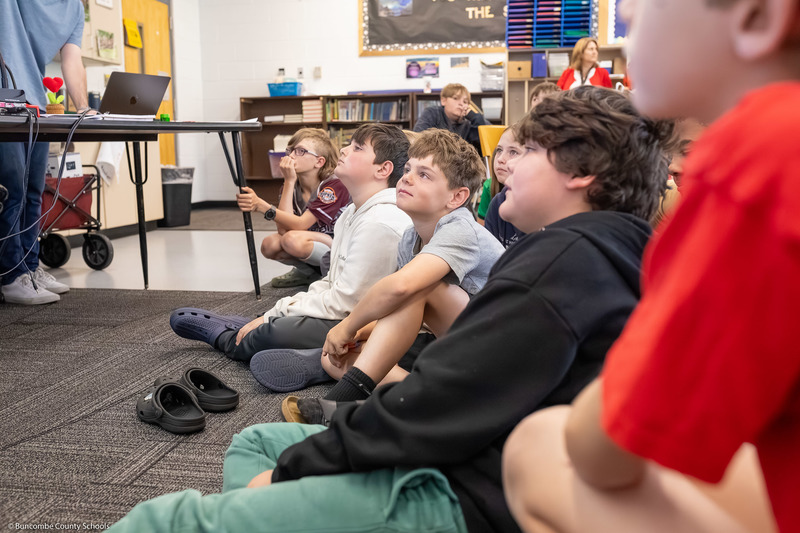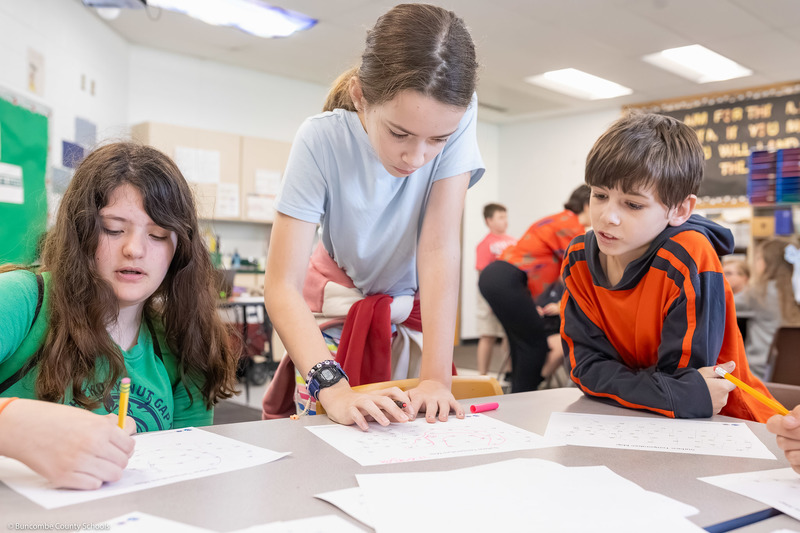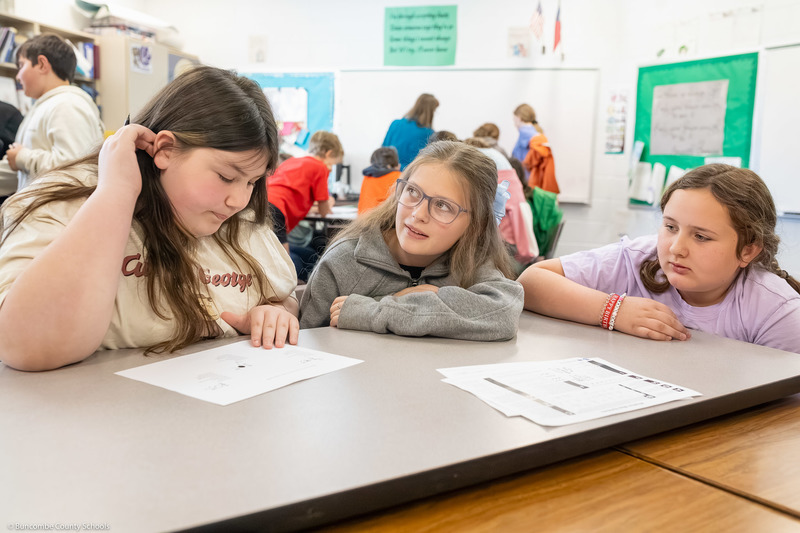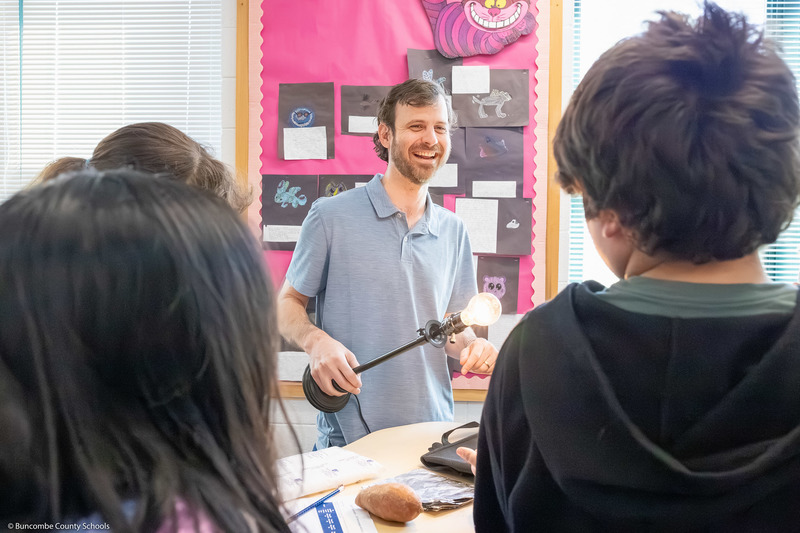
🌦️📡🌎 Black Mountain Elementary School (BMES) fifth grade students recently had the opportunity to step into the world of meteorology as experts from the North Carolina Institute for Climate Studies (NCICS) led an interactive, hands-on learning experience.
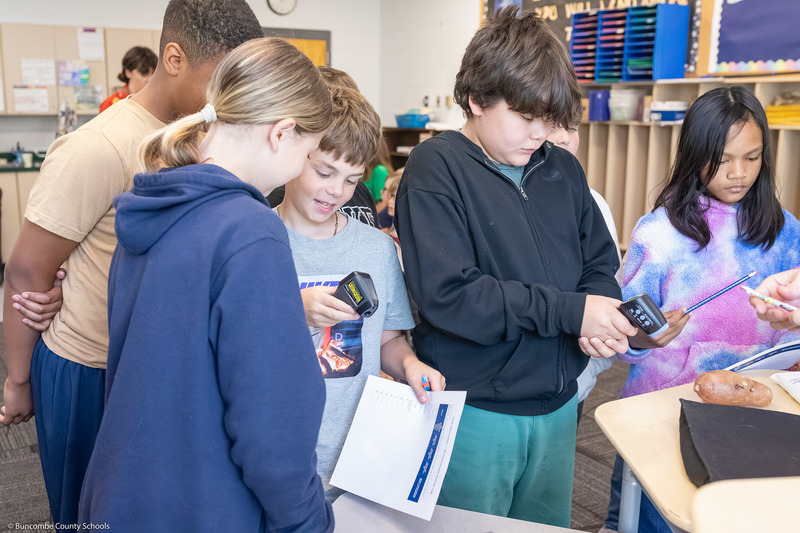
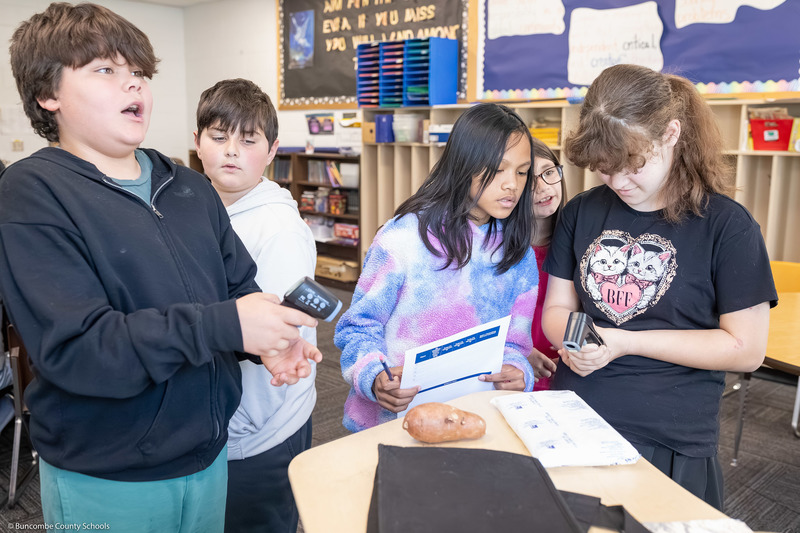
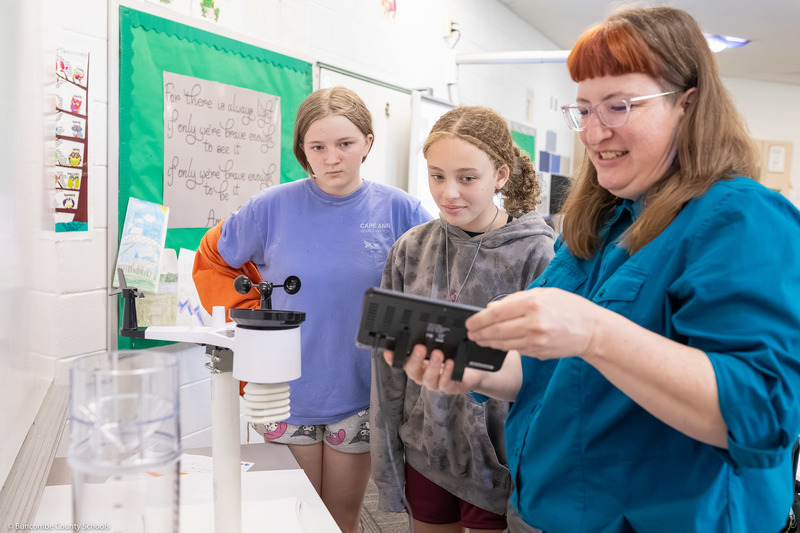
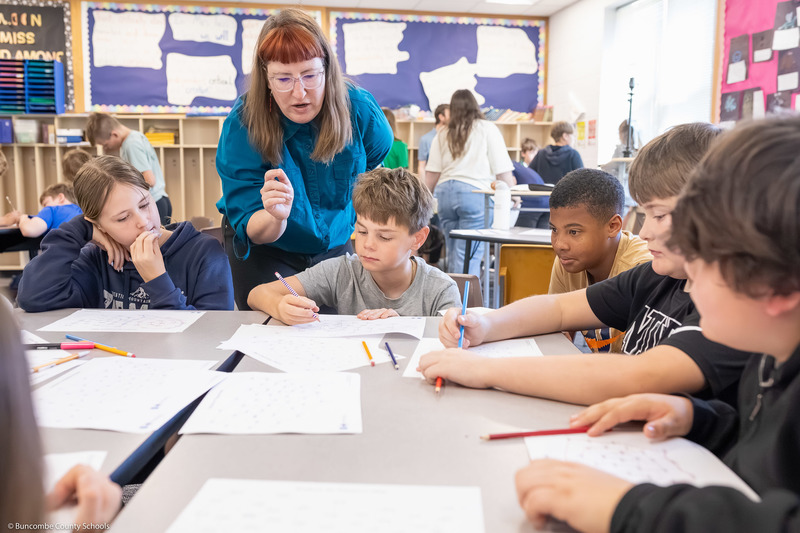
The visit combined a short presentation with three rotating stations, where students explored station plots, weather instruments, and satellite technology. Scientists introduced key concepts like atmospheric data, weather fronts, and how meteorologists interpret real-time conditions using professional tools.
“Engaging with adults outside of their teachers and family allows students to see that anyone can be a scientist and that science-related careers are valued in society,” said NCICS engagement producer Liz Cox. “It’s rewarding to witness the excitement in their eyes when they learn something new or have a positive experience.”
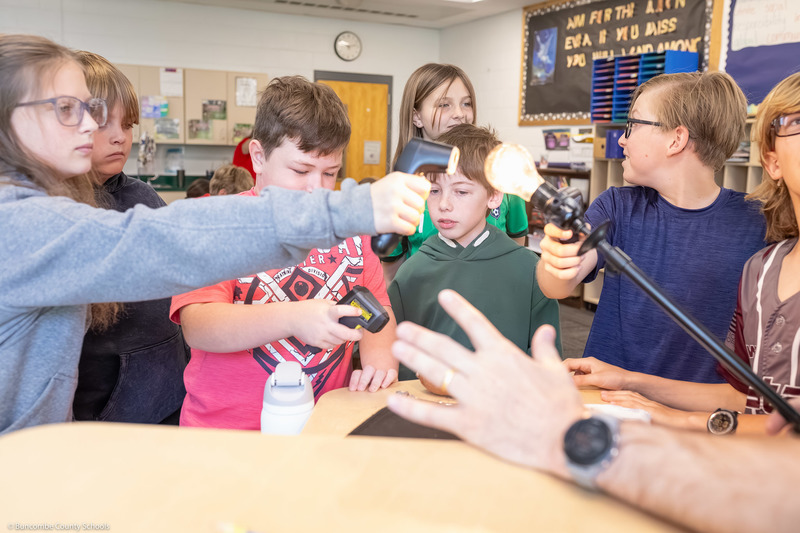
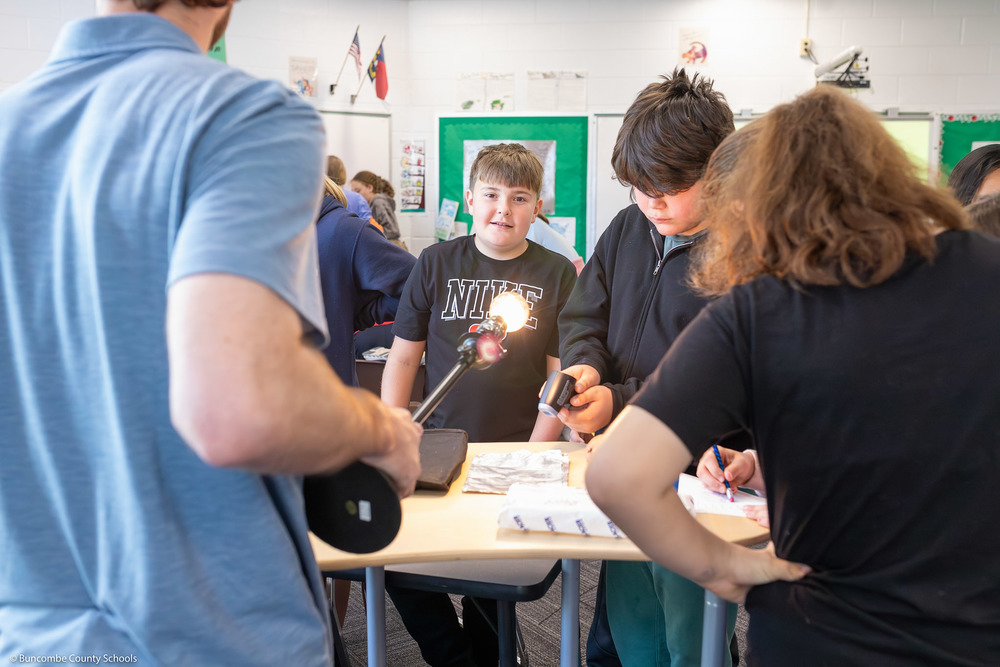
Cox, along with climate data analysts Alethia Kielbasa and Philip Casey, collaborated with BMES teacher Melissa Angel to align the presentation and activities with recent classroom lessons. Students worked together to decode station plots, draw isotherms and isobars on national weather maps, and even use infrared thermometers to explore how different surfaces absorb heat. These activities helped connect classroom learning to real-world applications in weather forecasting and climate science.
“In our weather unit, we've been talking about pressure and fronts, and we're working on how to read a weather map,” Angel said. “So this is a really great tie-in for that, for them to be able to see the actual, authentic tools that scientists use in the real world. It's really valuable for us to be able to have their expertise coming into the classroom and helping our kids put it all together.”
For the scientists, the experience was just as meaningful.
“Seeing firsthand the interest and excitement the students have for weather and climate science was so fun,” Casey said. “Their curiosity and engagement was very energizing for me.”
“The work that we do at NCICS always has communities, near and far, in mind,” Kielbasa added. “By visiting classrooms and working with teachers and students, we get to learn what questions our local community might have, as well as what background knowledge they might have either from learning in a school/formal setting or through personal experiences. This information can help us tailor some of our work to what is most important and to help us plan future outreach events.”